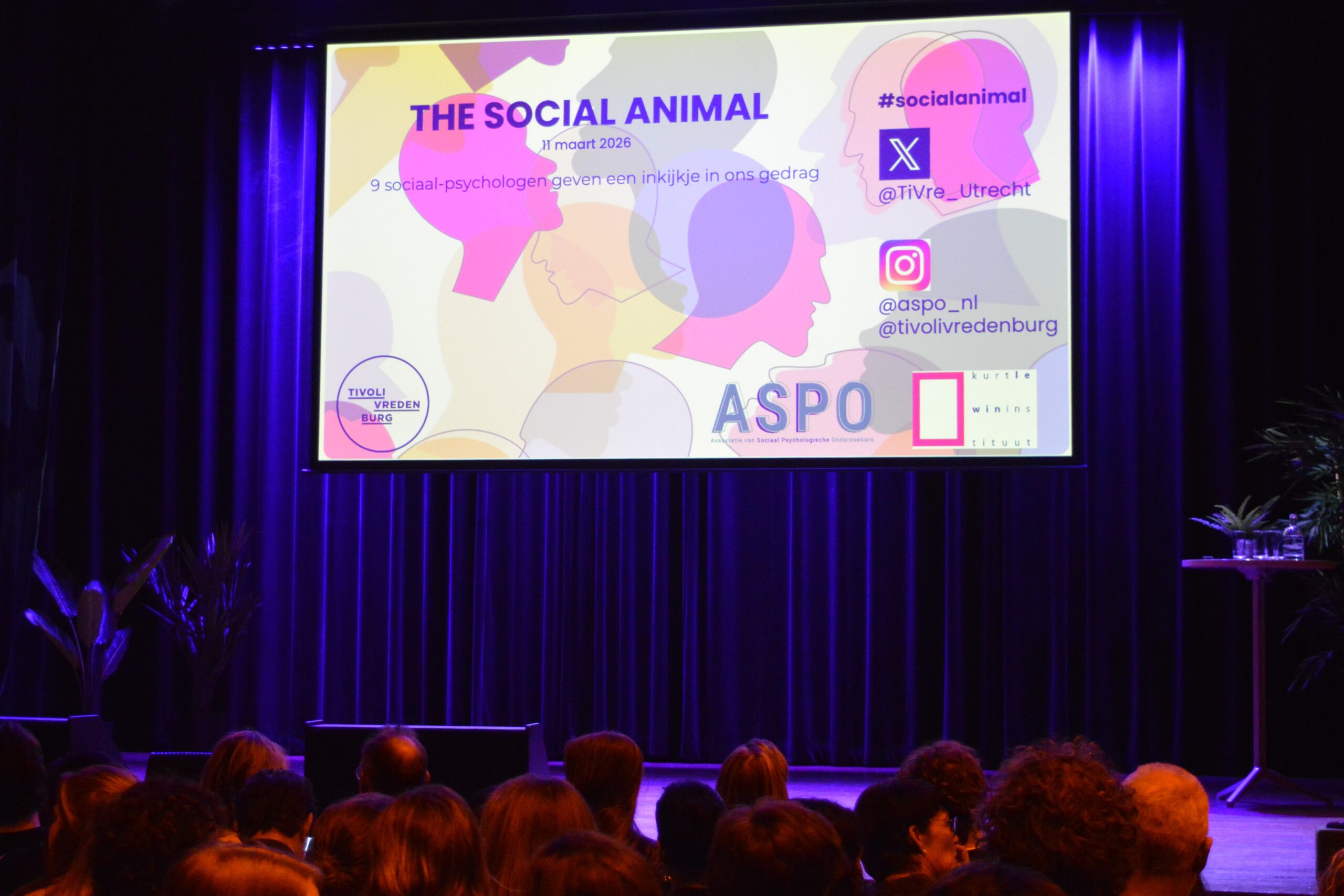
The Social Animal 2026
Written by: Lena rieder, PhD candidate, Utrecht University
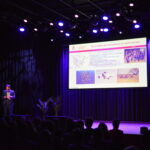
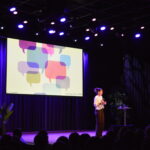
On the 11th of March, the yearly Social Animal Event took place in Tivoli Vredenburg in Utrecht and it did not disappoint! Nine social psychologists from different Dutch Universities were sharing their ‘freshest insights’ with the public in an engaging and fun way.
Amarins Jansma (Utrecht University) opened the evening with a timely question on how feelings of injustice relate to climate action. Her research shows a clear pattern: when people experience climate injustice, they are more willing to engage in climate action, like joining climate protests. But here is a twist: Many Dutch citizens perceive the current climate policy as unjust, which can lead to less governmental support and trust.
Next, Marret Noordewier (Leiden University) tackled social curiosity. In a world with growing polarization, her work asks a simple question: How do we become socially curious about people we disagree with?
Laura Hoenig (Free University of Amsterdam) kicked off her talk with: “Thanks for paying my university income through your taxes”. Her research is about public goods and the question how people decide in which public goods they invest, because as she says: “I am not a self-help coach, but you can’t invest in everything.” Her takeaway: We make choices based on effectiveness, equality, political views, and the impact on others.
Emma Gerritsen (Tilburg University) presented her research on destructive leadership. Her interviews with leaders revealed that harmful behavior often stems from feeling threatened, either emotionally or cognitively. Luckily, she can conclude that destructive leadership is not always driven by narcissism or bad intentions but rather by complex situations.
Leon Hilbert (University of Amsterdam) was talking about the ‘psychological poverty trap’. To bring economic inequality to life, Leon started out by dividing the audience by income and as he adds “of course not in a fair way”. His message was striking: financial stress can decrease feelings of control, leading to avoidance behavior such as leaving that dreaded blue envelope unopened.
Carsten de Dreu, the keynote speaker from University of Groningen, took us with him to zoom out and understand the evolutionary origin of human social behavior. As an illustration of our inherent human ability to connect and work together, Carsten made the whole audience do a big ‘la ola’ together.
Rob Bulterman (Nijmegen University) shared his insights about his research that he conducted at the Risk Factory in Limburg to better understand the benefits of experiential learning for children. His life test? With a QR code on every seat, he revealed how many people in the audience were willing to share personal data without thinking twice when filling in a survey.
Miriam Oostinga from Twente University highlighted the high-stakes world of suicide negotiations. Her research shows how easily communication can go wrong under pressure, and how important it is for police officers to learn to deal with mistakes. Sometimes an easy apology can make all the difference. Using VR, she helps train them for these life-or-death conversations.
Finally, Onur Sahin addressed institutional discrimination within the Dutch government. His team developed a practical discrimination test that helps civil servants question their own systems: why do certain rules exist and what happens when decisions rely on gut feeling and stereotypes only? The discrimination test turned out to be a valuable tool to allow civil servants to critically think and reflect to address institutional discrimination.
The evening was moderated by Sofie van den Enk who engaged the audience with her humorous, open and curious way of asking questions. Beyond the talks, what really made the night stand out was the amazing engagement from the audience. People asked thoughtful questions, shared their opinions, and sparked interesting conversations.
Already curious what new insights next year’s edition will bring…!
terug