KLI Conference 2026 Brings Together Research, Collaboration, and Community
Written by Gert-Jan Lelieveld (Chair KLI Conference) and Hannah Timmermans (KLI Manager)
The KLI Conference 2026 successfully brought together researchers from across the field of social and organizational psychology for two inspiring days of scientific exchange, interdisciplinary discussion, and networking. Chaired by Dr. Gert-Jan Lelieveld (Leiden University), the conference combined a rich scientific program with ample opportunities for participants to connect, reflect, and collaborate.
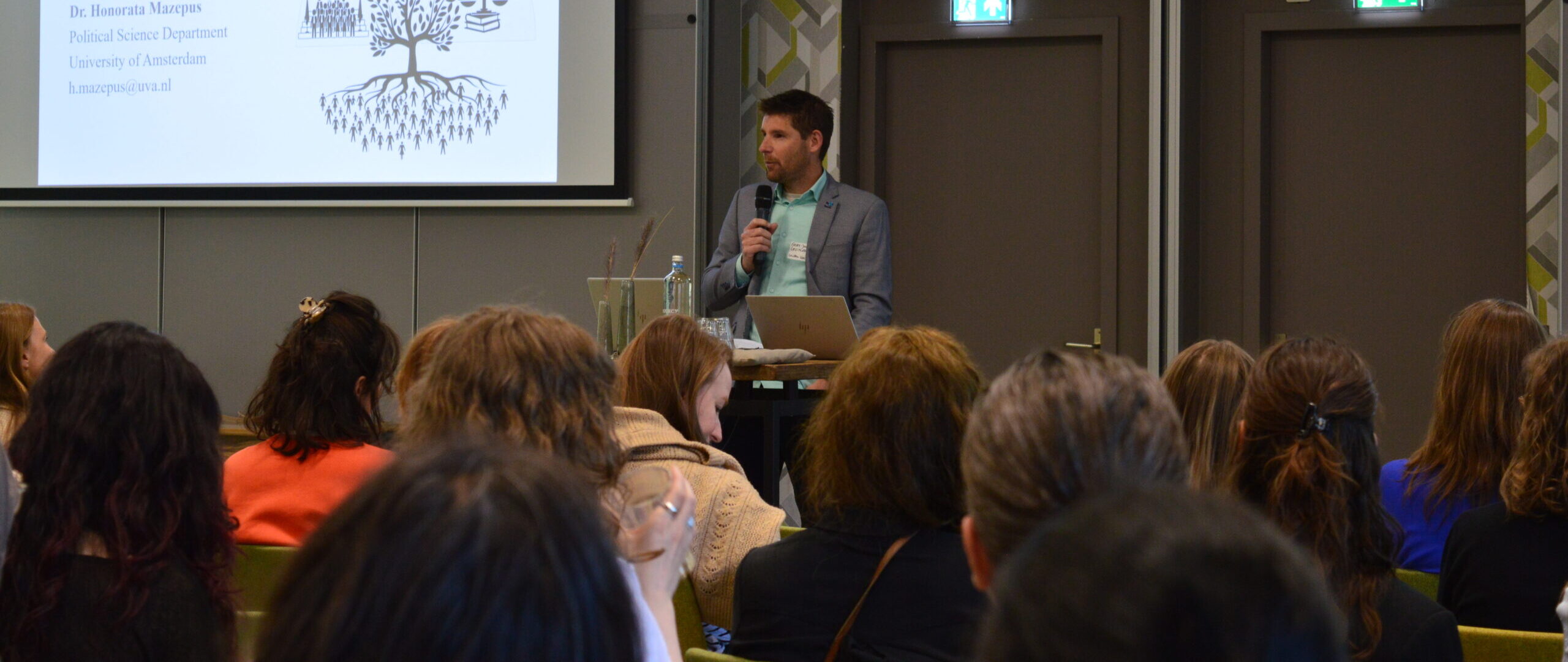
A highlight of the conference was the series of keynote lectures delivered by Dr. Honorata Mazepus (University of Amsterdam), Dr. Carey Morewedge (Boston University), and Dr. Michiel van Elk (Leiden University). Their engaging presentations offered fresh perspectives and stimulated discussions across disciplines.
Participants appreciated Honorata Mazepus’ keynote, which encouraged attendees to think beyond their own research fields and sparked conversations throughout the conference. Carey Morewedge talked about algorithm aversion and made the audience aware of the fact that we often prefer a human interaction partners over an AI, yet in some contexts people prefer algorithms to humans. Both Honorata’s and Carey’s active participation and approachable presence during the event were highly valued. Michiel van Elk’s keynote was also praised for its engaging and thought-provoking content.
In addition, a dedicated Workshop on Artificial Intelligence was organized by Dr. Jiahuan Pei and Radu Apșan (from the Free University in Amsterdam). The workshop provided participants with insights into the growing role of AI in research and offered an opportunity to explore emerging methodological developments.
The scientific program was organized around four themes that have been central to social and organizational psychology in recent years. Each theme was chaired by experts who facilitated discussion and exchange across different research perspectives:
- Bridging Science and Society: Collaborative Research, chaired by Michèlle Bal, Coen Wirtz, and Olaf Simonse;
- Engagement of Citizens in Sustainability Transitions, chaired by Goda Perlaviciute and Lise Jans;
- Work and Organizational Psychology, chaired by Antje Schmitt and Bram Fleuren;
- The Social Psychology of Economic Behavior, chaired by Giuliana Spadaro and Leon Hilbert.
Across all themes, researchers from the various KLI tracks presented their work, creating opportunities for fruitful discussions that bridged different levels of analysis, from intrapersonal processes to intergroup dynamics. This interdisciplinary approach encouraged participants to integrate perspectives and generate new insights on complex societal and organizational challenges. We want to thank all theme chairs for putting together this diverse and interesting conference program.
The conference also featured a vibrant poster environment in the main conference room, where 18 KLI members presented their research. Attendees could explore the posters during the poster session on the first day, providing opportunities for discussion and feedback. Reflecting the broad scope of the conference, the posters covered the full range of social and organizational psychology topics. This year, the Poster Award was presented in two categories: Most Promising Scientific Contribution and Most Promising Impact Beyond Academia, based on jury evaluations. The winners were Selina Langner and Kruthi Devarakonda.
Another highlight was the presentation of the KLI Best Paper Awards 2026. The awards were granted to Eva Grosfeld and Katharina Hilger, both of whom presented their work during the conference. Eva Grosfeld was recognized for her paper, “Mapping the Moral Foundations of the European Union: Why a Lack of Moral Diversity May Undermine Perceived EU Legitimacy”. Katharina Hilger received the award for “Exploring Paths of Change: Analyzing Teachers’ Emotion Regulation Repertoire Over Time Using Multi-Level Latent Profile Analysis.”
Beyond the scientific program, participants consistently praised the conference atmosphere. Many highlighted the excellent balance between presentations, networking opportunities, and informal social interactions. Participants described the conference as well organized, appreciated the welcoming environment, and emphasized the value of connecting with colleagues from across the Dutch social and organizational psychology community. The social events that were organized during the conference also really helped with that. The pubquiz that was organized by Ruthie Pliskin and Gert-Jan Lelieveld brought the attendees together while playing a fun game, and at the same time also taught them more about psychology and about their KLI colleagues. The morning run organized by Hannah Timmermans and Gert-Jan Lelieveld made sure that some members also started the day fit and energized. And of course, it was great that throughout the conference Gert-Jan used his superpowers to make sure that it was sunny whenever attendees could go outside for some vitamin D.
With its combination of high-quality research, interdisciplinary dialogue, strong community spirit, and good weather, the KLI Conference 2026 once again demonstrated the strength and diversity of social and organizational psychology research in the Netherlands.
terug